Baffin: My two weeks in Inuit Country - Aug 14th – 28th 2026
Day 1 - 2: The Long Trip North
I’m writing this at 6pm local time in one of the few restaurants that can go by that name, in Iqaluit, the capital of Baffin Island and Nunavut Territory.
Nunavut is the largest Canadian territory and Baffin the 5th largest Island in the world; 10+ times the size of Italy or UK.
Nunavut is country of the Inuit.
For those of you trying to find it on the map, we’re in the Canadian Arctic Circle, up north (very north) from Quebec on the west side of Greenland.
I have been traveling for 25 hours and it has taken 4 flights to get here. And we’re not even at our final destination. Another flight tomorrow. Then a two-hour boat ride and finally we shall be at the start of our trip.
For where that is, you shall have to read the next blog to find out. Think about famous James Bond’s places!
First impressions, travelling back to Canada after a few years.
The Canadian are fighting to keep some local identity but they more and more look like their Southern neighbours.
If anything else, similar to what happens in other part of the world where the population lives near the edges of wilderness and in scanty populated areas, people seem to have maintained that wild, well weathered, burly, extravagant look. With absolutely no dress sense or style everyone seems like they are straight out of a 18th century movie about French trappers and early colonists mixing with the local Indians.
Everything in this part of Canada is huge. Massive amount of land and water and mostly uninhabited.
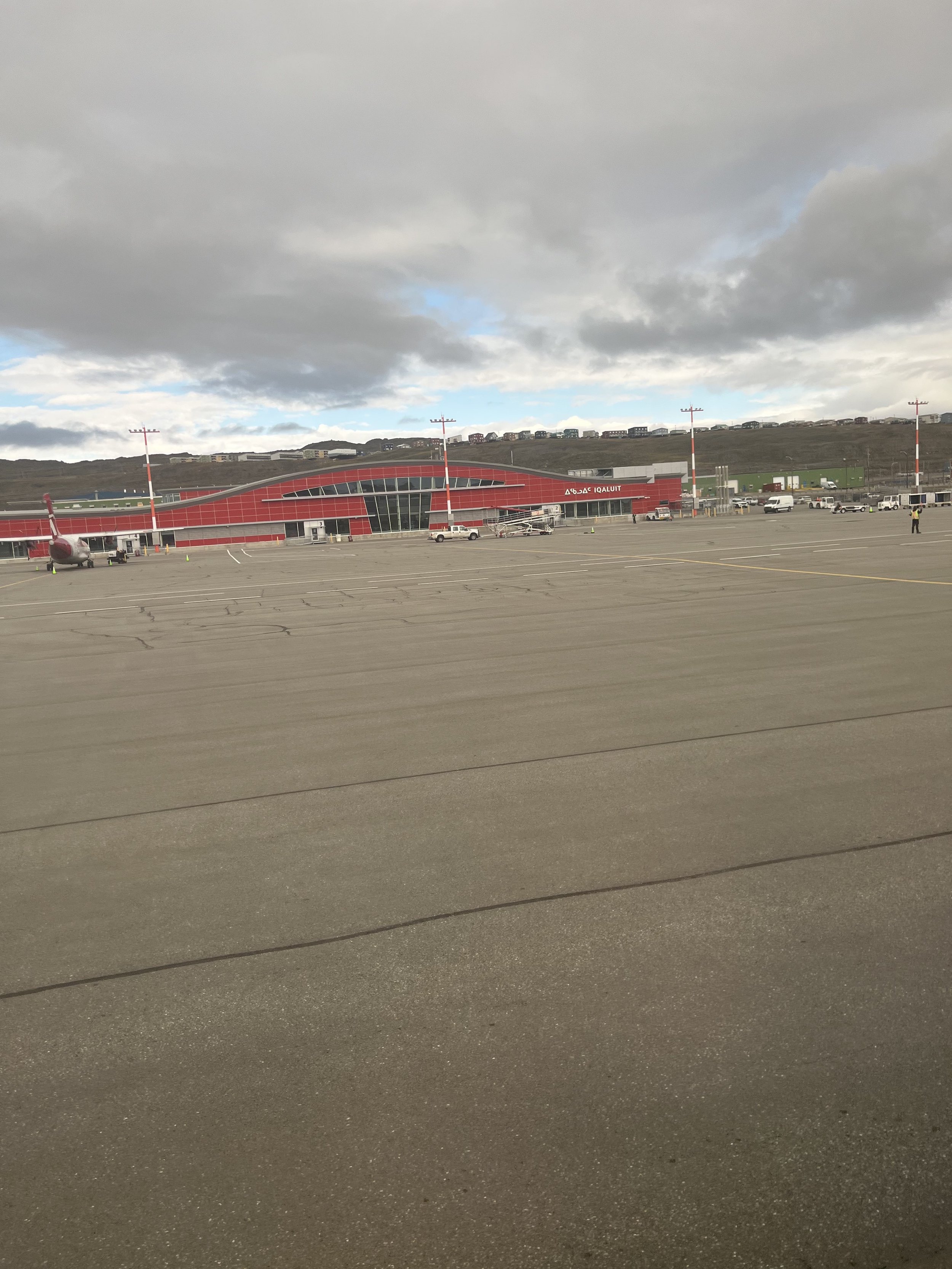
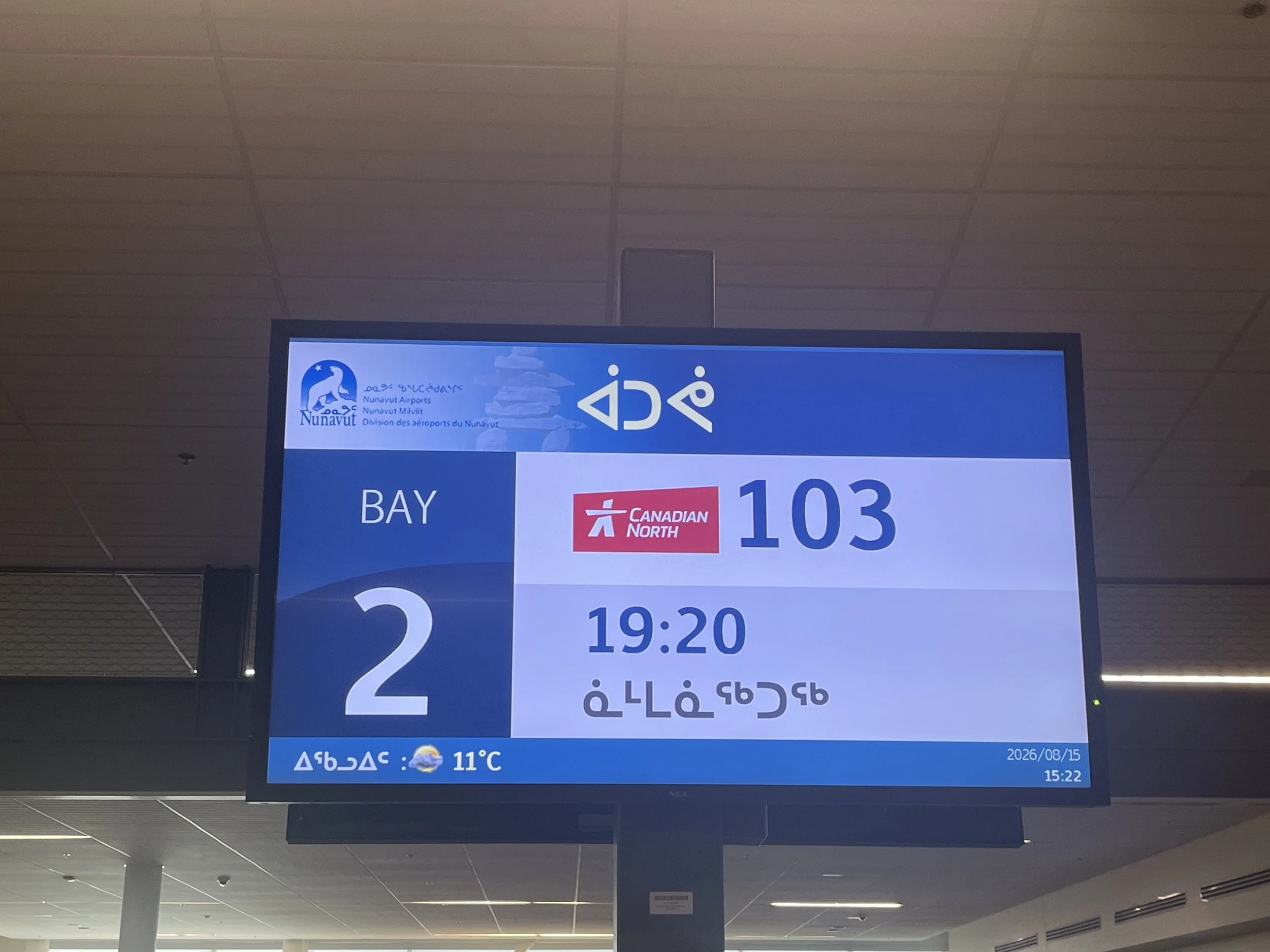
The language is bi-lingual: French (Québécois) and English. As we have got closer to the Arctic, we have gone tri-lingual: adding Inuktitut (the language of the Inuit). And the local Inuit writing, is some sort of hieroglyphics used everywhere on buildings and signs.
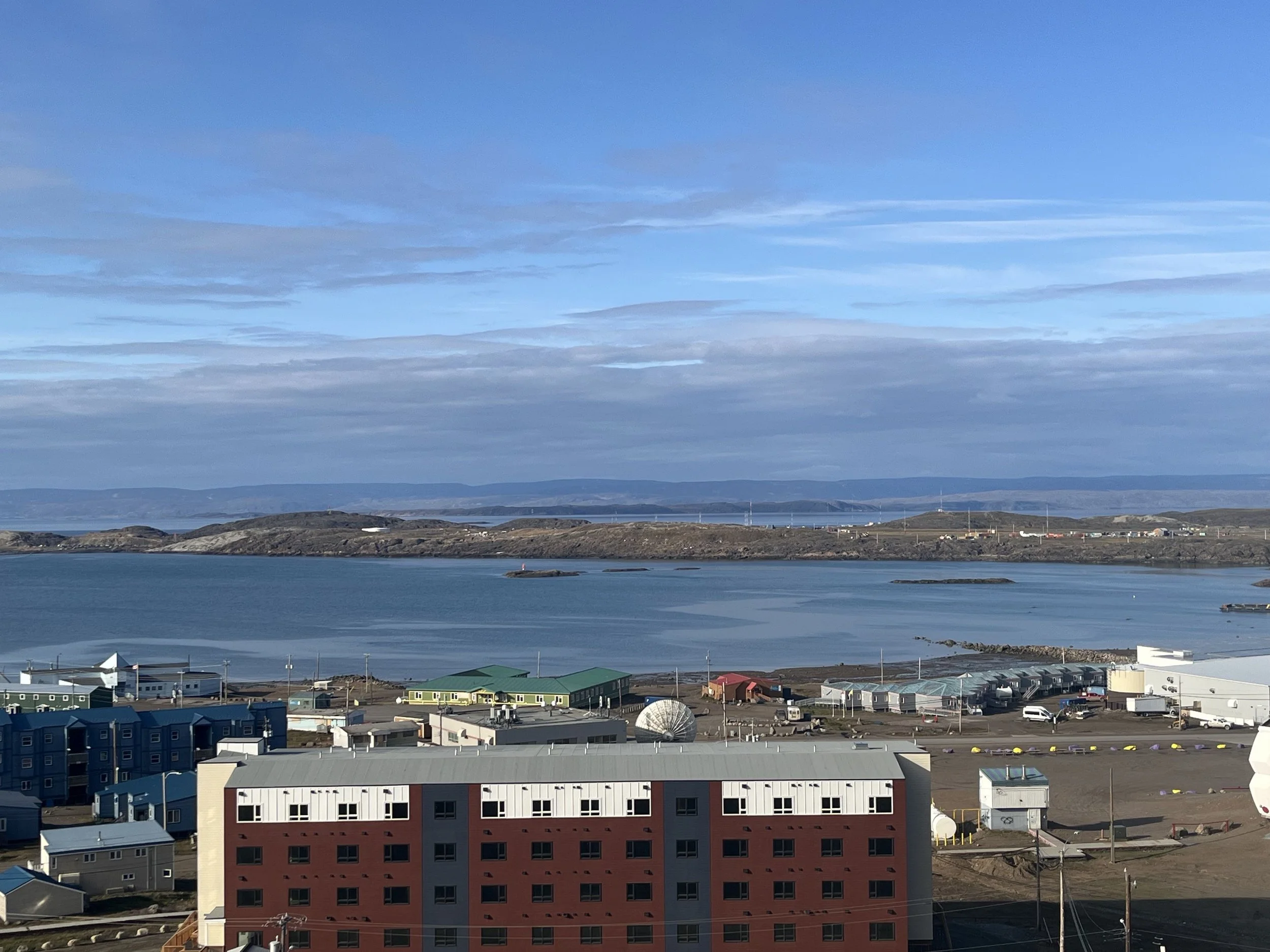
Iqaluit is a typical “glacial” town, the kind you find in the south and north hemisphere. More attractive in the winter when the ice and snow make the picture pretty; but very rough in the summer with dirt tracks for roads, abandoned materials everywhere and many pre-fab buildings or shacks, mixing with modern constructions of all sorts.
It’s Nature which is attractive in these parts of the world. Nothing which is man-made comes closer. And the bay of Iqaluit is stunning.
The local indigenous population, the Inuit, have now mixed not only with the original white colonists but with the Africans, the Asians, of 1st, 2nd and 3rd generations, and every other immigrant from everywhere in the world who has recently made his way to Canada.
You wondered what is left of the original people, traditions and culture apart from the old pictures, the ornaments and the souvenirs for tourists
One thing I have noticed. The Inuit are short. Very short.
And unfortunately, many are a bit on the wide side, given the American fast food diet.
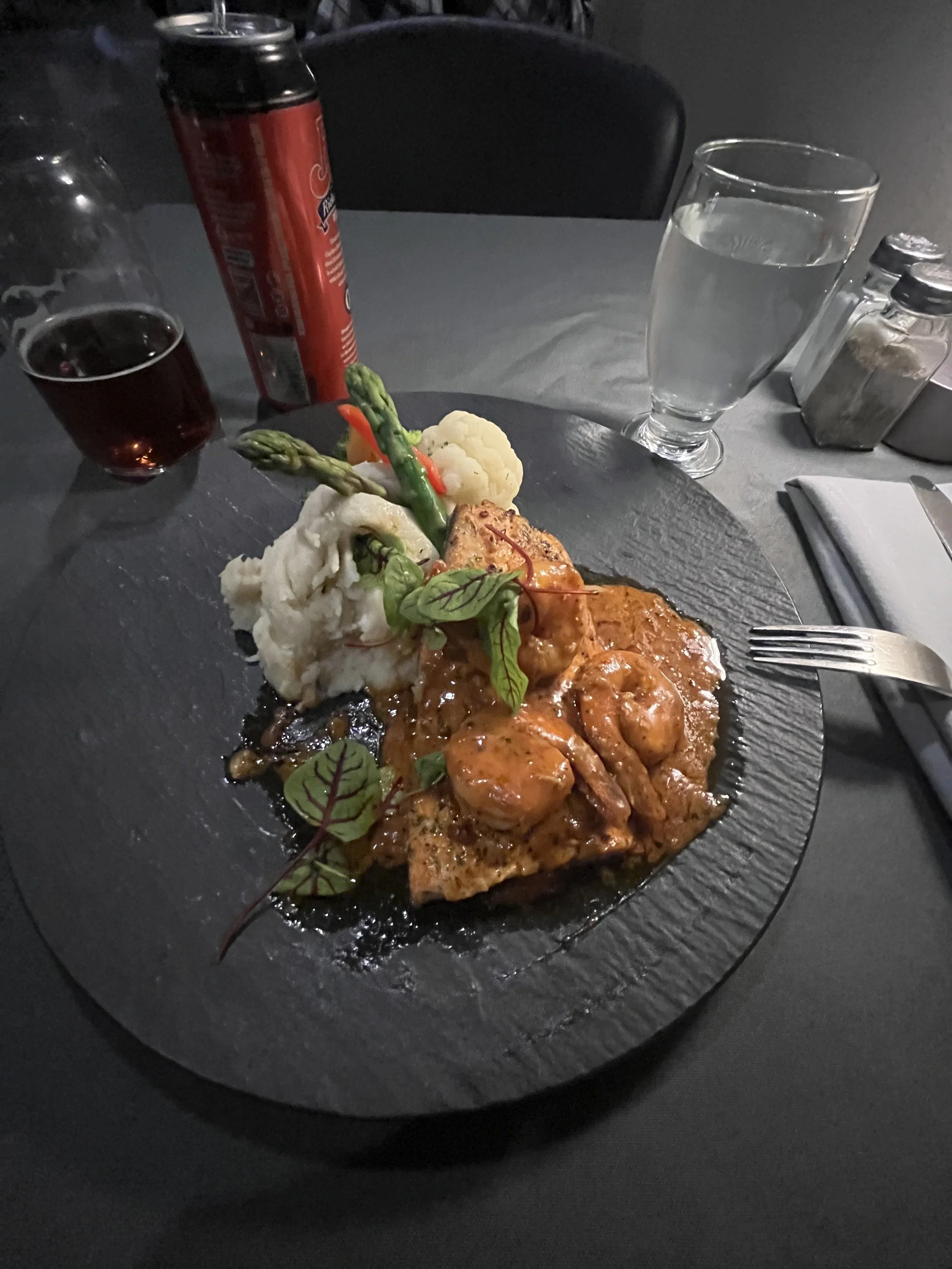
I am eating arctic char and had caribou carpaccio as a starter, which were the only two items I could find closest to locally sourced food. But the asparagus, broccoli and tomatoes on my plate and even the fact they are offering “carpaccio”, tells a different story. Western food has arrived in the Arctic. I was even offered a Caprese salad!!!
Shame most of the choice in this part of the world is American fast food. Local restaurants are: Pizza Hut, KFC, Horton’s (a local Canadian burger maker). And I had to come to one of the top restaurants in town to find a proper meal.
What would their local ancestors think? No whale or seal on the menu.
Anyway, tomorrow I’m picking some expedition food from our local chef. It will be interesting to see what she has prepared.
I shall also visit the Hunters Market to see if something else is on offer.
Then on to Qikiqtarjuaq in the afternoon (if you can pronounce the name).