Baffin: Day 5 - The 1st day walking
Just before going to bed on day four, we learn how to set up our tent; how to cook our freeze dried meals (add warm water); how to keep food away from our tents (just in case the bear shows up); and how not to leave any wastage in the water and land. The balance of the ecosystem becomes critical when waste does not deteriorate.
Also our packs get “exploded” in the evenings, when we take everything out (to set up camp), and repacked in the morning before we start walking. Everything has to fit. And the routine is repeated daily.
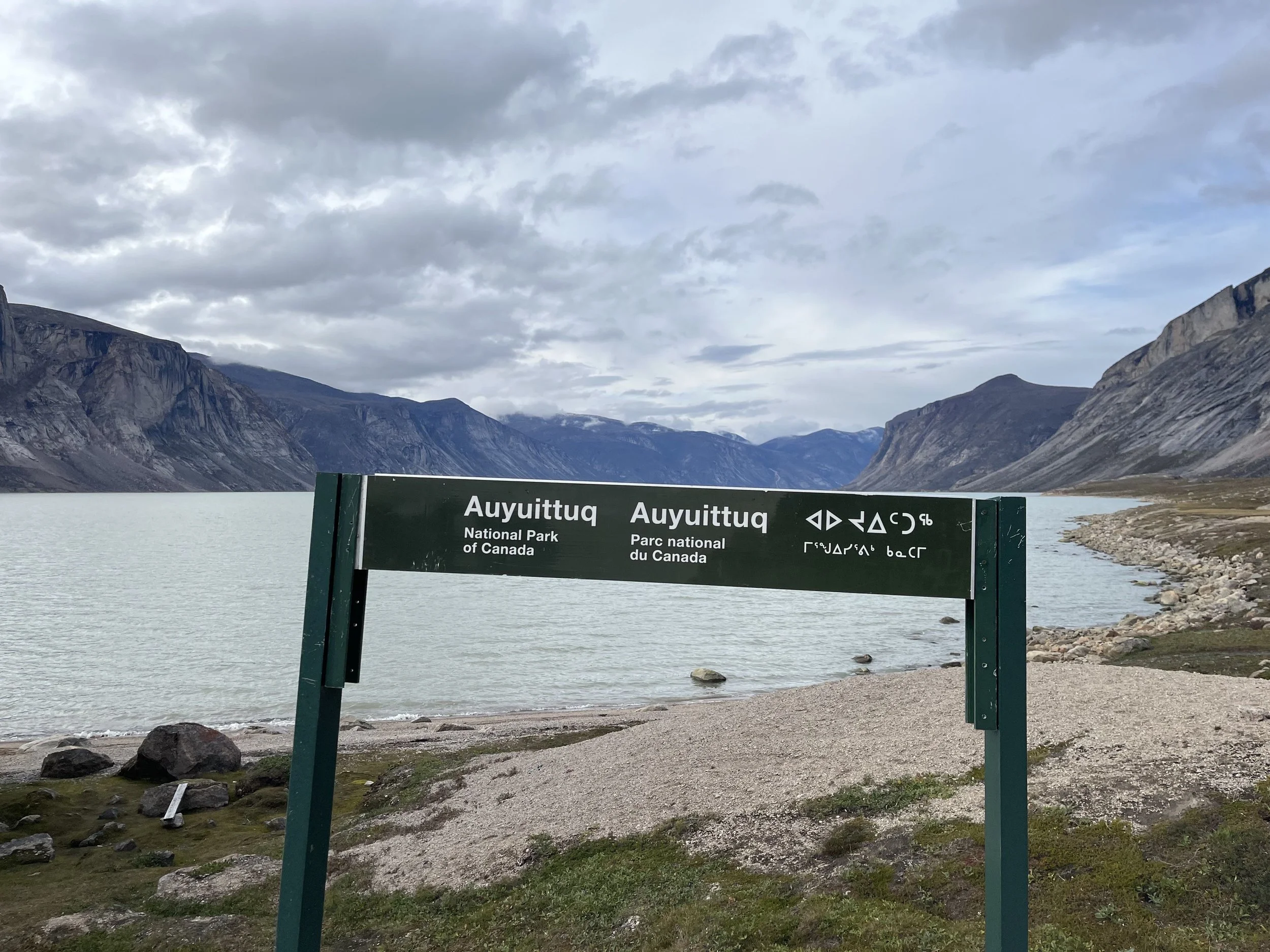
So, we are in the Auyuittuq National Park following the traditional route of the Inuit from Qikiqtarjuaq to Pangnirtung, which they took when they wanted to visit their neighbours. This traditional route used to be done in winter with a dog sled or more recently with a snow mobile. It is still used today. The road follows the River Owl up to the Auyuittuq pass; and then descends down the River Weasel, to the closest fjord to Pangnirtung.
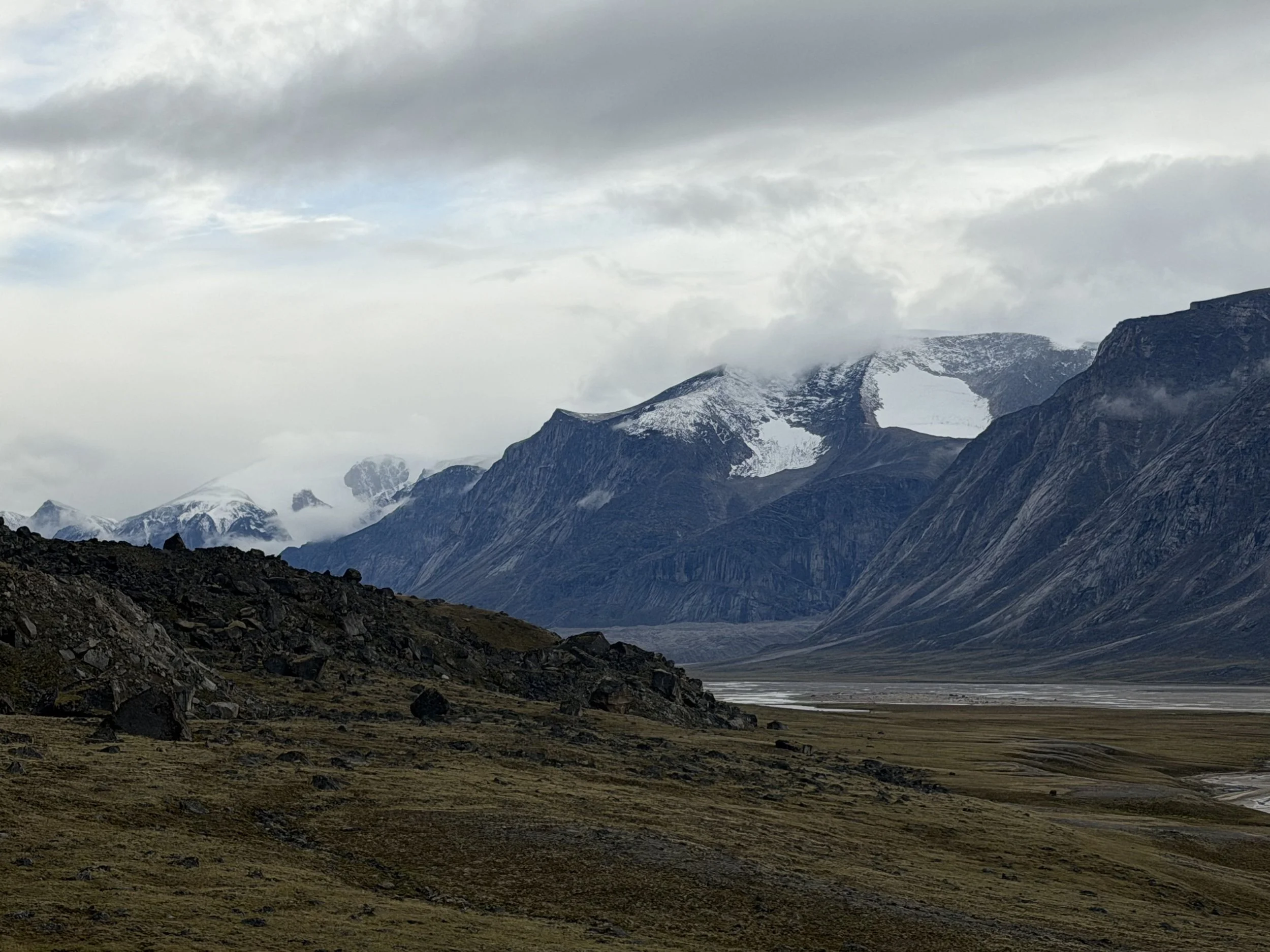
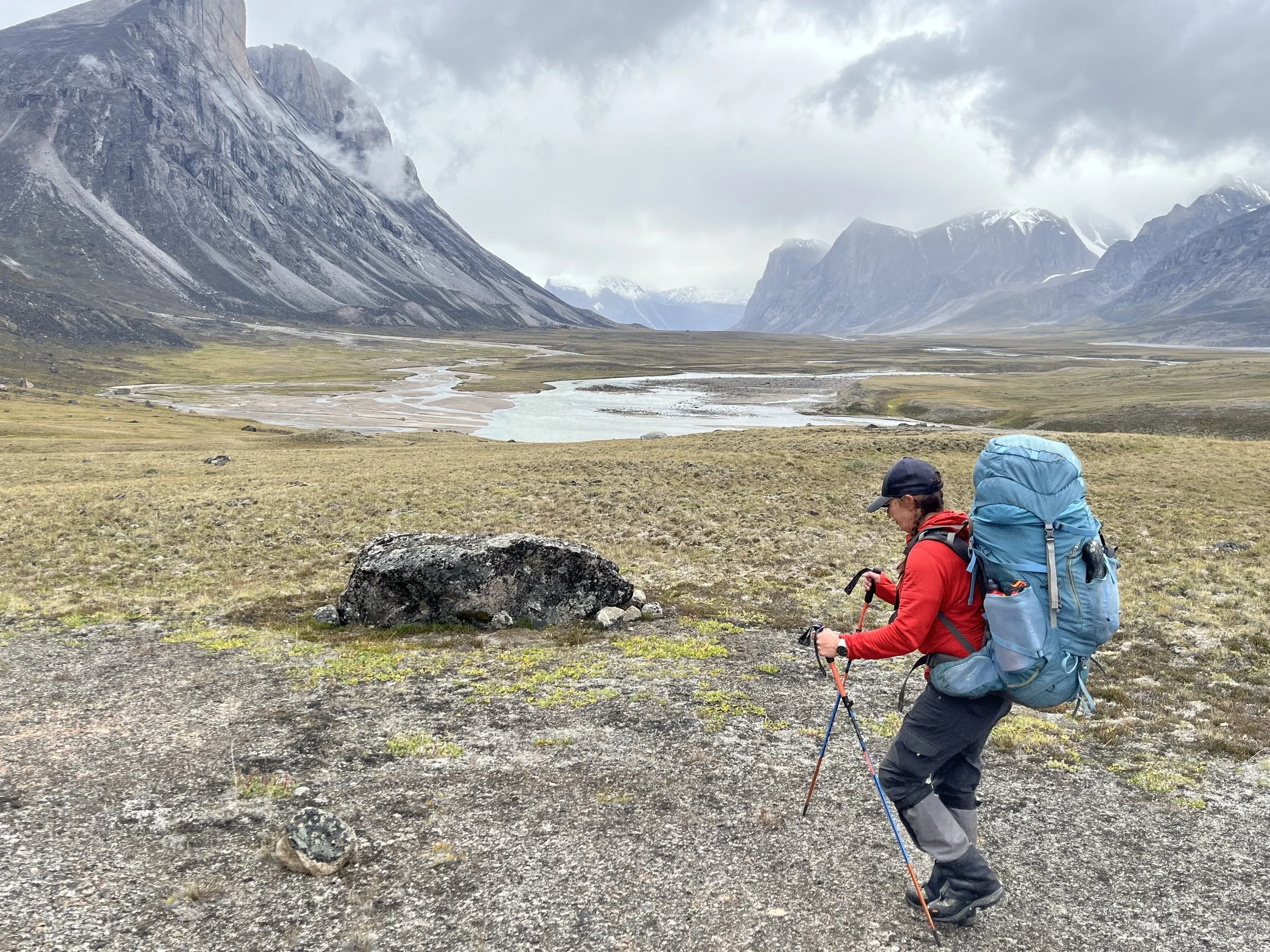
It passes through a spectacular valley surrounded by 100+ unexplored peaks. Some have the names of Vikings gods: Thor. Asgard, Loke, Frigga, ….. but the naming is recent and there is no proof of the Vikings to ever have gotten here.
Asgard is a vertical tower with a flat top made famous by James Bond. But mighty impressive even if you disregard that.
We shall be walking 15-20 km a day with the occasional fishing (I hope) and maybe climbing a peak or two.
Day one walking is the 15km from Pangnirtung North Cabin to Owl River Cabin.
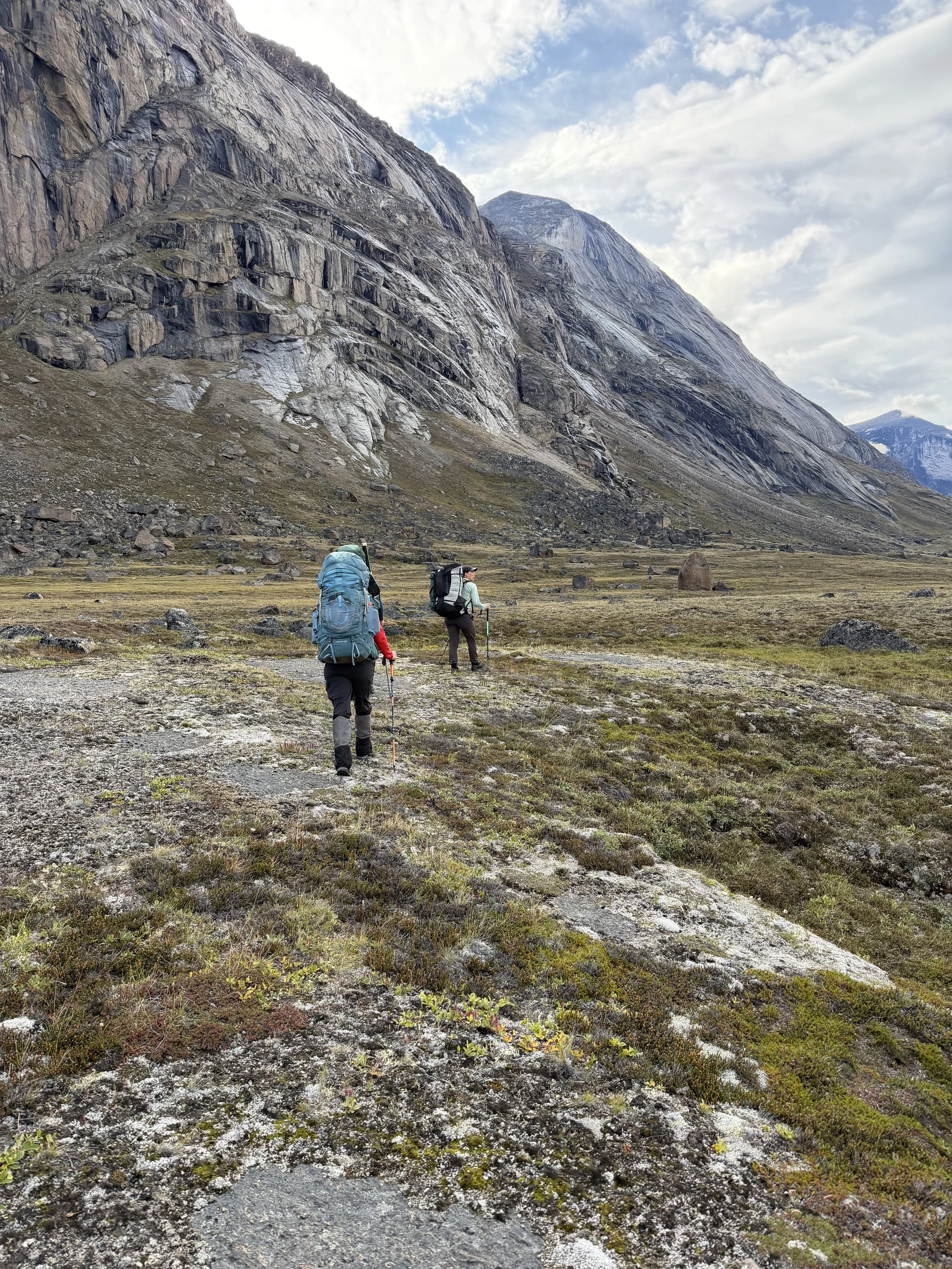
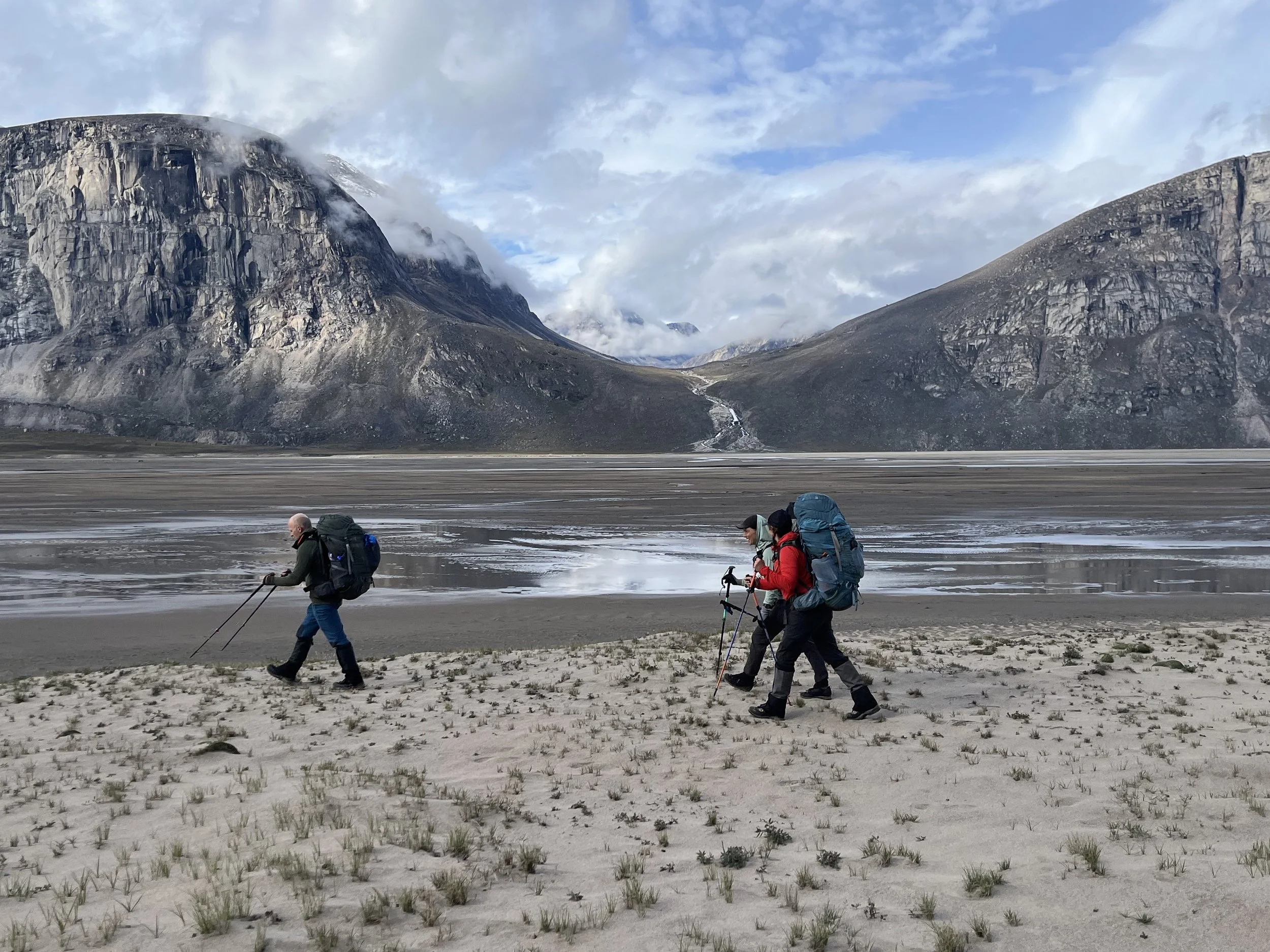
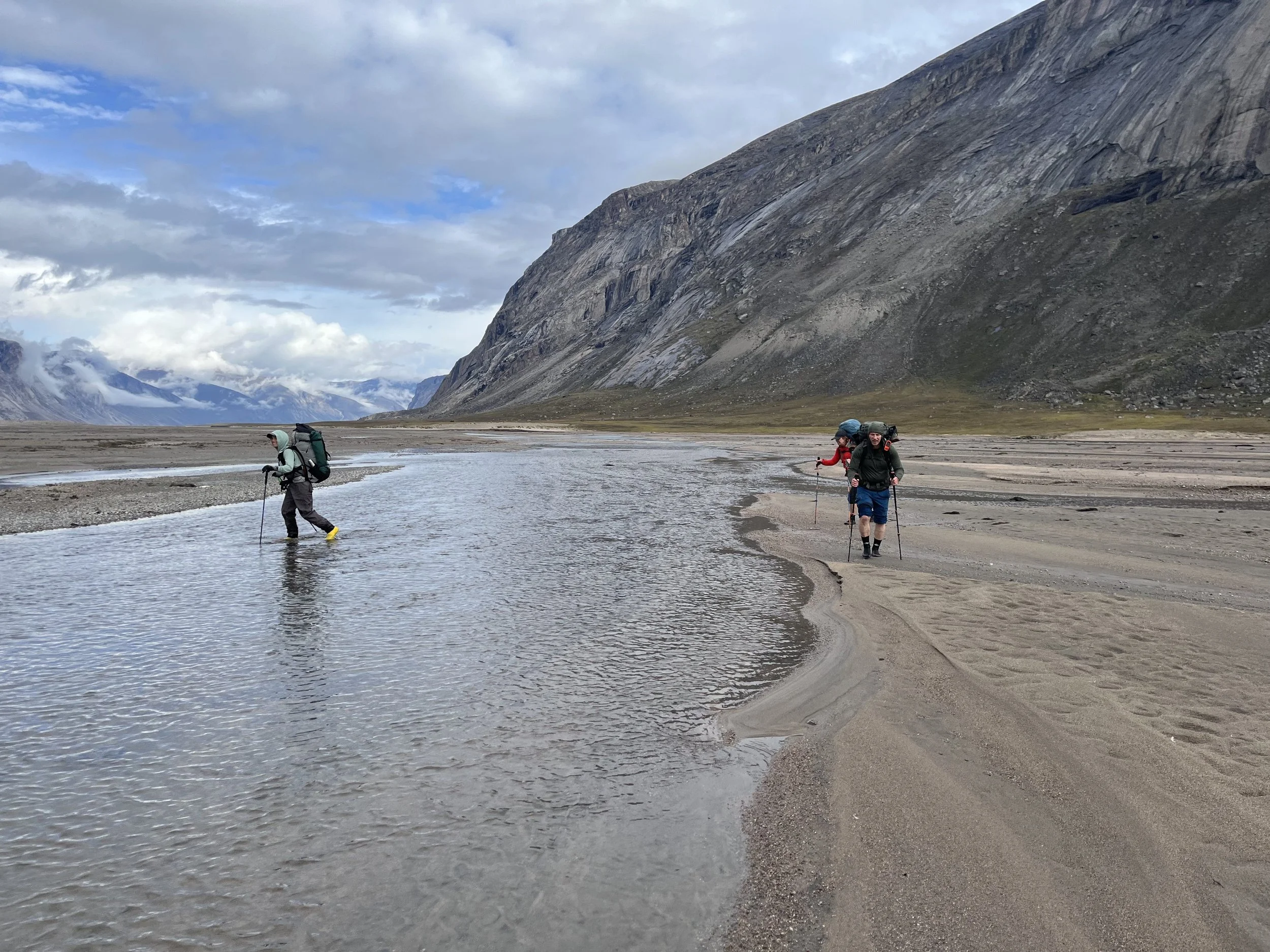
We are ready by 9am and despite the heavy load we progress at steady pace, which is slow. The terrain changes from hard to mushy bogs to deep wet bogs, wet sand to grass and gravel. Up and down.
But the biggest nuisance and the biggest risks are the streams and rivers crossings. Every 500m there’s a little torrent of water to pass. In some cases, the torrent is a river which is knee deep. This means a change of shoes. I have neoprene socks and crocs. The pants are rolled up to the knees and here we go. In the water, which by the way is freezing given it comes from a glacier. Once the river is crossed, we change again into walking boots and keep going.
You could of course decide to just walk through the water, but hypothermia is a real danger in the Arctic and walking with wet trousers and shoes would not help.
We have two major river crossings on our journey. The day is spent walking, talking, recounting stories, stopping for a few breaks to drink some water or collect and eat berries. Not many birds except the omnipresent Canadian geese. Tracks of lemmings, a couple of seagulls;… and no bears.
The valley is beautiful. So lots of pictures.
We arrive in camp at around 3pm. On schedule. By the time we have exploded the bag packs, set up the tents and night gear, and boiled some water for a cup of tea, is 5pm. The perfect time to try some fishing in a nearby lake given the fact the river near the camp is too shallow and running too fast.
Arctic char should be running. Although I learn that in the Arctic, the char comes into the river at the end of summer to winter in the lakes. And run back into the sea when the ice breaks for the summer feed. Opposite to the salmon.
Judging by the fact that we don’t see any fish neither in the river nor in the lakes, it feels we might be early. Celine says she was here in September and the streams were steaming with fish. We see nothing. Maybe better luck in the next lake.